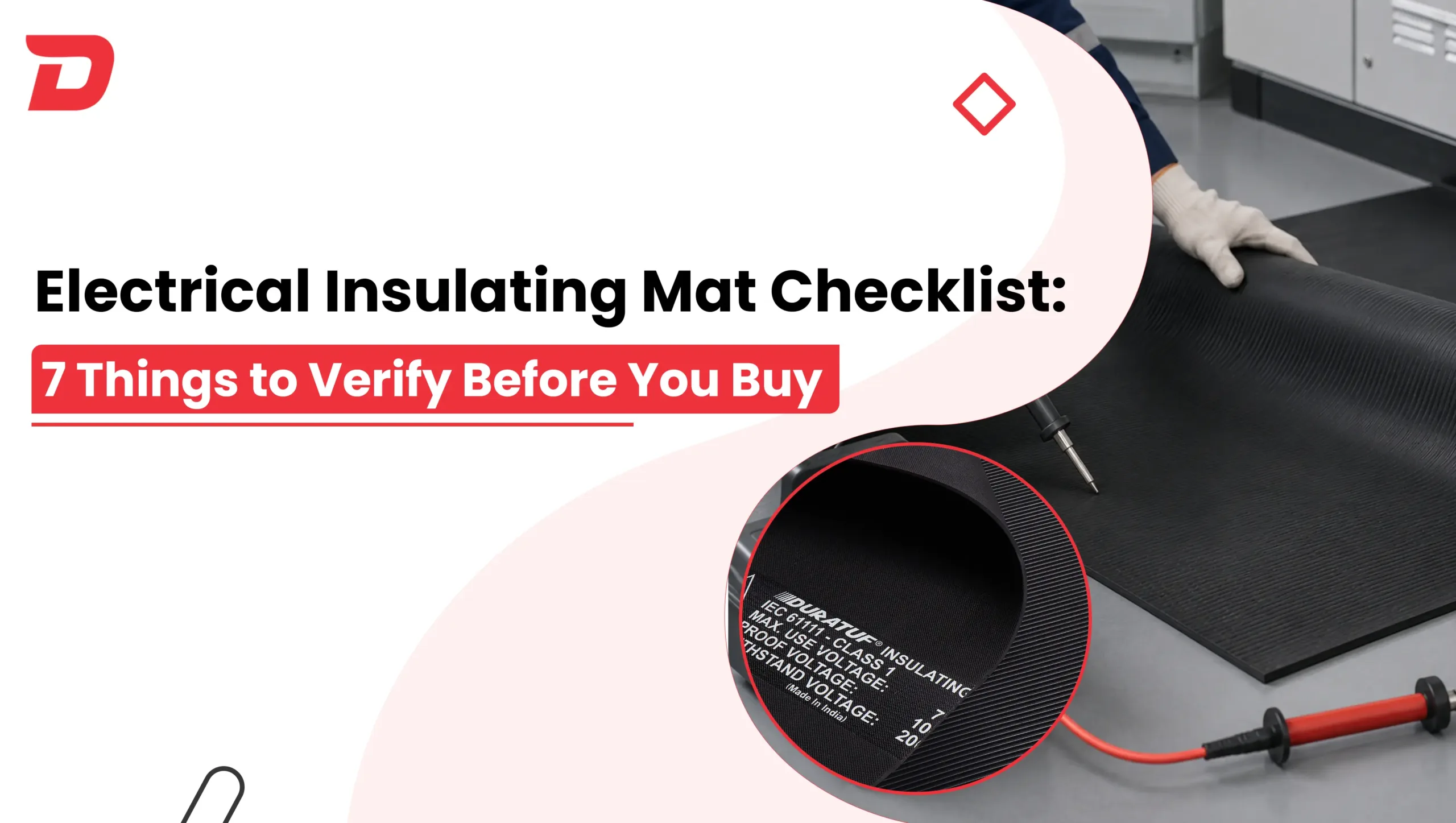
Electrical Insulating Mat Checklist: 7 Things to Verify Before You Buy
Do you verify these 7 things before purchasing an electrical insulating mat? Do you also have an electrical insulating mat checklist in hand for the best purchase?
A checklist works like magic when it comes to the verification of safety equipment, such as an insulating mat. It is important if you are in the procurement team, trying to source quality-assured insulating mats. They make sure that you are not investing in a liability.
Read this blog to get a complete electrical insulating mat checklist!
Why Choosing the Right Electrical Insulating Mat Matters
Choosing the right electrical insulating mat matters as it is directly related to your electrical safety. Electrical insulating mats are protective equipment that saves you from electrical accidents such as arc flashes, current leakage, short circuits, and others. Thus, a wrong mat will fail to protect you. You can get burns, injuries, or even die due to these electrical hazards. In addition, you can also face legal issues, penalties, and other consequences if you fail to pass the safety audit by using the wrong mat.
Top 7 Mistakes to Avoid When Buying Electrical Insulating Mats
1. Check Standard Compliance
Checking if your mat is standard-compliant is one of the most important points in your electrical insulating mat checklist. Purchasing and installing non-compliant mats can result in legal compliance risks, penalties, and damage to your reputation.
2. Verify Voltage Rating
You should make sure to purchase the right voltage rating insulating mat for your application. Check if their AC proof voltage, dielectric strength, or working voltage limit is suitable for you. To get the right class of insulating mats, you can ask for an electrical insulation mat buying guide from your supplier.
3. Confirm Thickness & Dimensions
Our IEC 61111:2009 has a standard thickness of 2 mm to 5 mm, ASTM D178 mats have thicknesses ranging from 3.2 mm to 12.7 mm, and IS 15652 mats are 2 mm to 3 mm thick. Their standard dimensions are 1 m x 10 m. However, you should make sure that their thicknesses and dimensions match your application area. However, you can ask for custom sizing for specialized requirements.
4. Evaluate Material Quality
Asking for samples is an important point in the electrical insulating mat checklist. You should inspect and test the samples to ensure their specifications are as per the industry requirements. This will help you understand quality consistency.
5. Inspect Surface Design
Check if they have a proper surface design. Thus, you should make sure that they have an anti-skid design, such as a ribbed or dotted surface texture. This ensures that the workers do not get hurt due to slipping and falling.
6. Ask for Test Certificates
Test certificates prove the quality and reliability of an insulating mat. As a result, they are considered in the electrical insulating mat checklist. Your suppliers should provide test certificates for their electrical insulation properties as well as mechanical strength.
7. Check Supplier Credibility & Track Record
Your electrical insulating mat checklist should include checking the reputation of your supplier. They should have positive testimonials and ratings on different platforms. Reliable suppliers will ensure the provision of quality-assured insulating mats and end-to-end customer support.
Common Mistakes Buyers Make
- Focusing on upfront cost only
- Avoiding analyzing the lifecycle value of the insulating mats
- Ignoring the operational and environmental conditions of the workplace
- Not comparing the quotations from different suppliers before making a decision
- Forgetting to ask for test certificates, warranty, and compliance verification
Pro Tips for Industrial Buyers
- You should have an electrical insulating mat checklist to make sure you follow the best practices for a good purchase.
- Make sure that the electrical insulation, resistance, and mechanical strength properties are suitable for your application.
- Your electrical insulating mat checklist should also include requesting samples.
- Choose a supplier who is reputable in the industry and has good reviews across social media and e-commerce platforms.
- Checking appropriate documents, such as test certificates, warranty, and compliance certificates, is a must in the electrical insulating mat checklist.
Conclusion
If you are in a procurement team, an electrical insulating mat checklist ensures proper selection of insulating mats. It ensures that you cover all the points that are required to be verified before purchase. Starting from the material quality to the supplier, it has every point. If you are still confused during your purchase journey, reach out to us!
Frequently Asked Questions
Check if your insulating rubber mats are compliant with the safety standards. They should come with test certificates and proper labels.
An insulating mat should pass the dielectric strength, AC proof voltage, hardness, tensile strength, elongation at break, and other tests for checking the resistance properties.
Yes, anti-skid properties ensure worker safety by minimizing the risks of slipping and falling of the workers while they are moving.
No, local or non-certified mats compromise your electrical safety. Besides, you can face lawsuits, forced shutdowns, insurance denials, and penalties for using them.
Your insulating mat supplier should be reputable. They should have ready stock, high-end support, and an efficient supply chain team to ensure a seamless purchase journey.