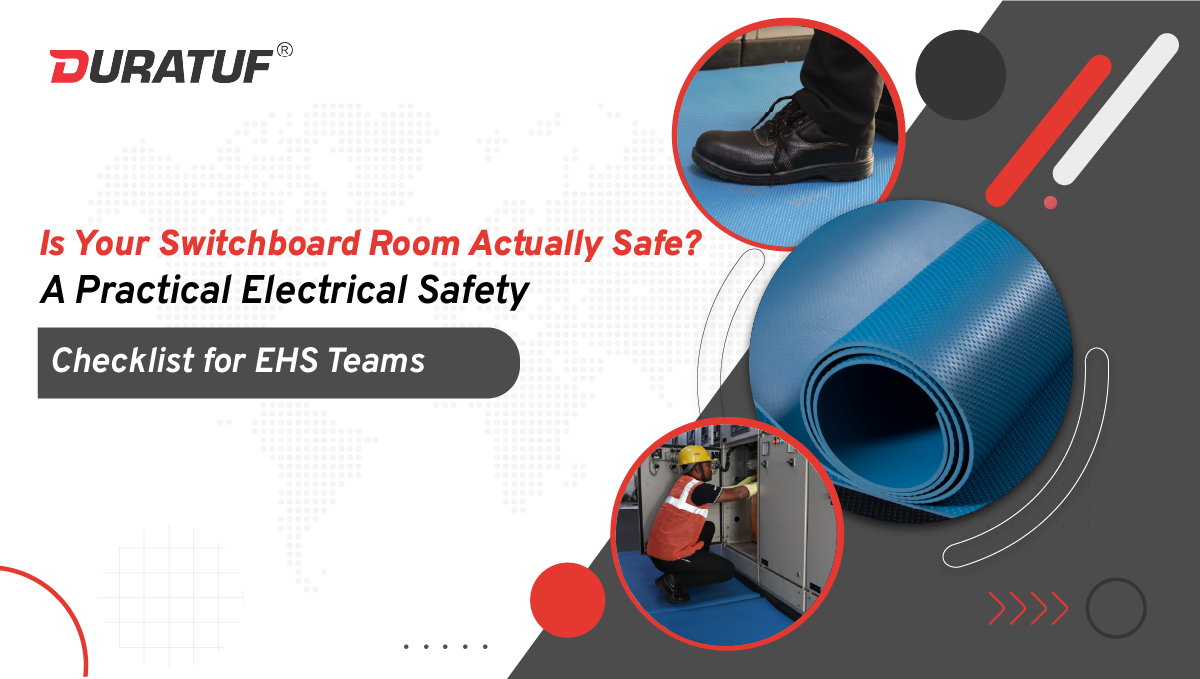
Is Your Switchboard Room Actually Safe? A Practical Electrical Safety Checklist for EHS Teams
Most electrical incidents in Indian plants do not happen because someone was careless. They happen because something that looked fine was not actually fine.
The mat had no visible cracks but had been degrading for two years. The isolator was labelled, but wrongly. The earthing connection looked intact and had a corroded joint underneath.
Switchboard rooms hold the highest energy exposure in any facility. A fault here is not a tripped breaker. It is an arc flash, a fire, or worse.
Here is a working switchboard room safety inspection checklist for EHS officers who actually use these on the floor.
Insulating Mats: Start With the IS 15652 Compliance Check
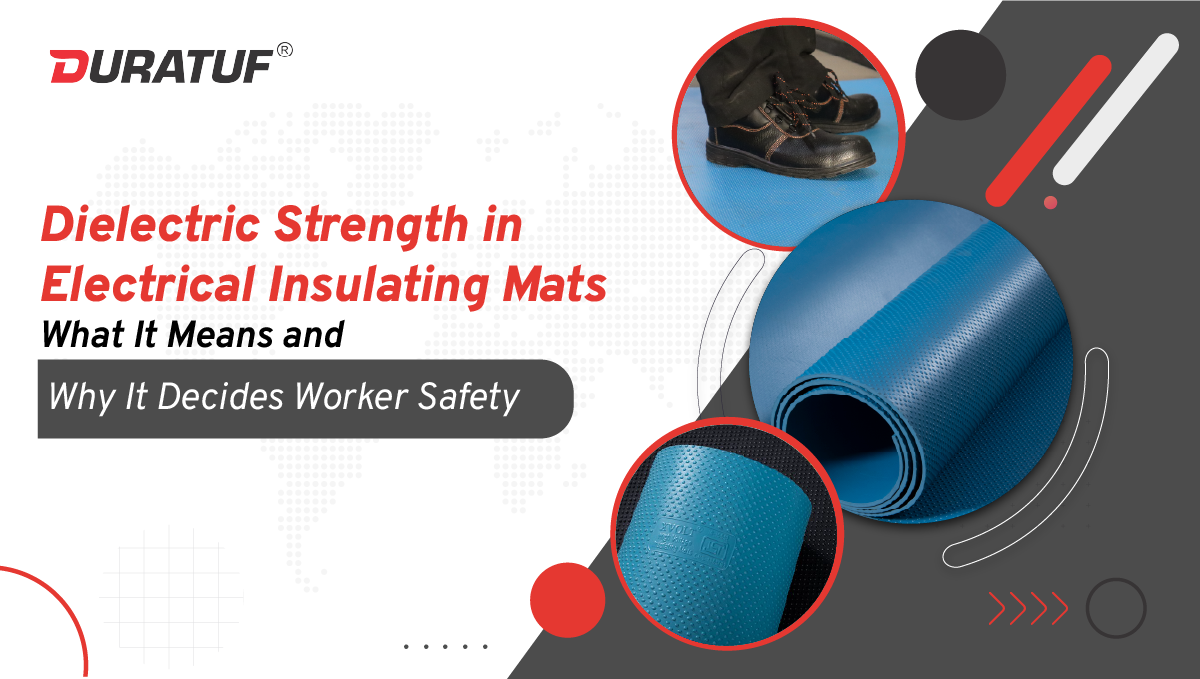
The mat is the first physical barrier between an operator and a ground fault. Most rooms have one. Far fewer have the right one.
#1 Check the voltage class first:
Class A: up to 3.3 kV
Class B: up to 11 kV
Class C: up to 33 kV
A Class A mat in front of an 11 kV panel is an unprotected zone. It just does not look like one.
#2 Check the mat surface, not just from the doorway
Ozone and heat degrade rubber long before it looks worn. Run your hand across the surface. Cracking or brittleness means the dielectric strength has already dropped. Replace it.
#3 Verify certification:
- ISI mark printed on the mat itself, not just on the roll label
- BIS licence number confirmed on the BIS portal for new suppliers
- ERDA or equivalent third party test report for any mat in a zone above 11 kV
Manufacturer-issued certificates are self-generated. They do not confirm what was actually tested on the batch delivered to you.
#4 Check coverage
The mat must span the full working width in front of energised equipment. A gap between sections, or feet extending past the mat edge during panel operation, breaks the protection.
PPE Requirements for LT and HT Panel Rooms Safety
Insulating gloves are mandatory. But present and compliant are two different things.
#1 Check for every pair in the room:
Correct voltage rating for the zone Within annual retest date No punctures, cuts, or chemical contamination Stored away from sharp tools and solvents
#2 For rooms with arc flash labelled panels:
- Arc-rated clothing and face shield must be physically present and accessible
- The PPE category on the panel label must match what is available in the room
- If the label is missing or the PPE is not there, fix both before anything else
Dielectric footwear adds a second protection layer for operators working regularly in HT rooms. The insulating mat does its job better when footwear does not create a parallel conductive path.
Earthing and Bonding: The Most Overlooked Switchboard Room Safety Check
Earthing failure shows up in almost every Indian industrial electrical safety audit. It is the most dangerous gap because it is invisible until a fault happens.
#1 Run through these on every inspection:
Here are the things to inspect-
- All panel enclosures, switchboard frames, and cable tray structures bonded to the earthing system
- Earthing conductors intact, no corrosion, no disconnection along the run
- Continuity check done at the panel level, not just a visual sweep
- Earthing resistance tested within the past 12 months, results documented
IS 3043 specifies 1 ohm or less for most industrial applications.
A test record from three years ago is not a valid current status.
Signage, Labelling and Access Control in LT HT Switchboard Rooms
Unlabelled panels and open switchboard rooms are two of the three most common violations found in Indian facility electrical audits. Both are easy to fix. Both keep getting missed.
#1 Access control:
- Room locked when unattended
- Access restricted to trained, authorised personnel only
- Visitor or contractor entry only with a permit and an escort
#2 Signage at the entry point:
- High voltage danger board posted and clearly visible
- Restricted access board in place
- Emergency contact and isolation instructions displayed
#3 Inside the room:
- All panels, feeders, and isolators labelled correctly
- Labels match the single-line diagram available in the room or with the electrical team
- No handwritten corrections or missing labels on active circuits
An unmarked isolator during an emergency response is not an inconvenience. It is a life-safety risk.
Housekeeping and Physical Condition of the Switchboard Room
The space around switchboards must not be used for storing materials, even temporarily. In practice, Indian switchboard rooms accumulate cables, tools, packaging, and miscellaneous items faster than any other room in the plant.
#1 Check for and clear:
- Combustible materials near panels: paper, cardboard, rags, plastic packaging
- Tools or loose cables stored against panel doors or on top of enclosures
- Open cable trenches or uncovered floor penetrations
#2 Verify that these are functional:
- Ventilation system working and not blocked
- Emergency lighting operational and tested
- CO2 fire extinguisher mounted, charged, and within inspection date
Water, foam, and dry powder extinguishers are not safe for use on live electrical equipment. A wrong extinguisher near an LT panel is itself a hazard.
Isolation and Lockout Procedures: The Gap That Causes Maintenance Incidents
Most electrical incidents during maintenance work happen not because the equipment failed, but because isolation was incomplete or assumed rather than confirmed.
#1 Verify for every panel in the room:
- Written isolation procedure exists and is specific to that panel
- Physical lockout equipment available: padlocks, hasps, danger tags
- Permits to work system in place for any live or recently de-energised work
#2 Operator readiness check:
- Personnel trained on isolation procedure for each panel they operate
- Training records current and available for inspection
- No verbal handovers substituting for documented permit-to-work
Lockout procedures that live only in a binder on a shelf are not implemented procedures. They are paperwork.
Quick Reference: Switchboard Room Safety Inspection Checklist
| Zone | What to Check |
| Insulating mats | IS 15652 class vs voltage, ISI mark, surface condition, coverage, third party test report |
| PPE | Glove rating and retest dates, arc flash PPE availability, dielectric footwear |
| Earthing | Bonding continuity, resistance tested within 12 months, conductors intact |
| Signage and access | Room locked, danger boards posted, all panels and isolators labelled |
| Housekeeping | No combustibles, trenches covered, ventilation working, CO2 extinguisher present |
| Isolation and LOTO | Written procedures, physical lockout equipment, permits to work, training records |
Duratuf’s XVOLT range covers all three IS 15652 voltage classes for switchboard room mat requirements. Contact our team for specification support or to request third party test documentation.
Frequently Asked Questions
A formal documented inspection at least once a quarter. HT rooms above 11 kV warrant monthly checks. A daily visual sweep for mat condition, housekeeping, and access control takes under five minutes and catches most recurring issues early.
IS 15652:2006, issued by BIS, covers electrical insulating mats for LT and HT panel room applications up to 33 kV working voltage. BIS certification with the ISI mark has been mandatory for all mats sold in India since January 2024.
CO2 only. Water, foam, and dry powder extinguishers are unsafe on live electrical equipment and must not be placed in switchboard rooms as the primary extinguisher.
No. Each zone requires a mat rated for the highest voltage in that zone. A Class C mat can cover a Class B zone but not the other way around. Mixing classes across zones in the same room without zone-specific mats is non-compliant.
Wrong mat class for the voltage zone, expired or missing PPE retest records, and unlabelled or incorrectly labelled isolators and feeders. All three are easy to correct once identified on an inspection.