
Mastering Electric Safety with Electrical Insulating Mats
Electrical insulating mats are one of the most critical and most overlooked components of a workplace electrical safety program. They form the last line of passive protection between a worker and a potentially fatal ground fault.
This guide covers everything procurement teams, EHS managers, and electrical engineers need to know: voltage classes, applicable international standards, selection criteria by application, maintenance requirements, and common compliance errors.
What is an Electrical Insulating Mat?
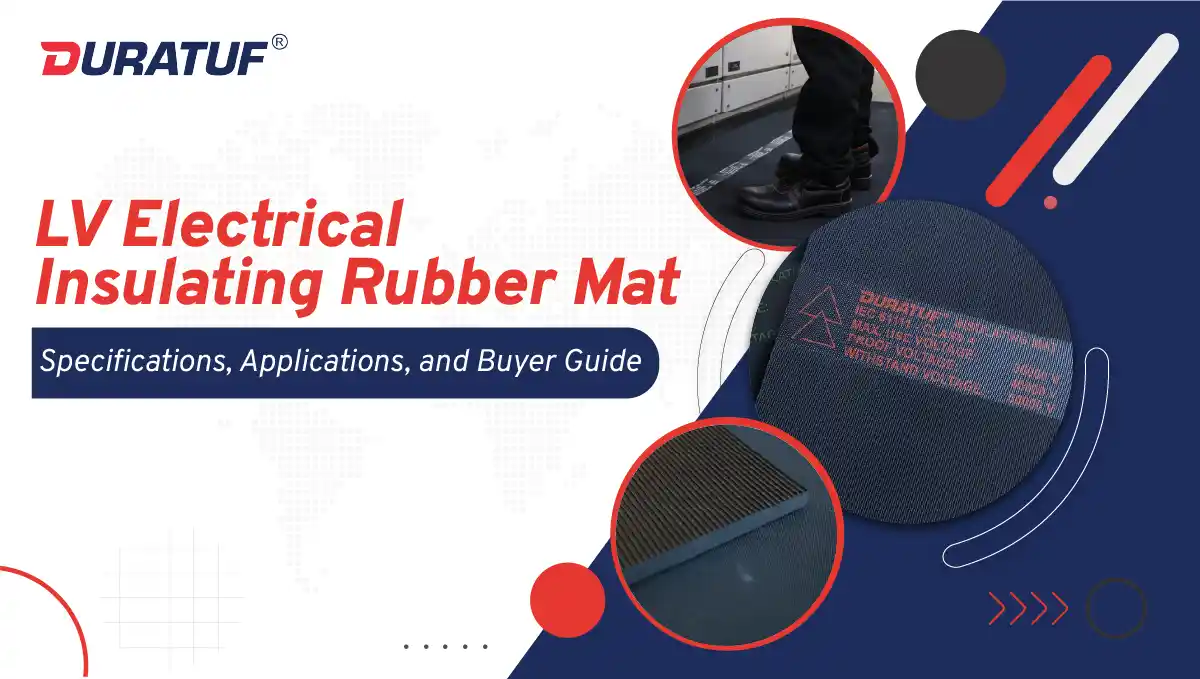
An electrical insulating mat is a rubber-based protective floor covering engineered to prevent current from passing through a worker's body to ground. Unlike general anti-fatigue or anti-slip mats, insulating mats are manufactured from a specially compounded dielectric rubber that resists electrical current under high-voltage conditions.
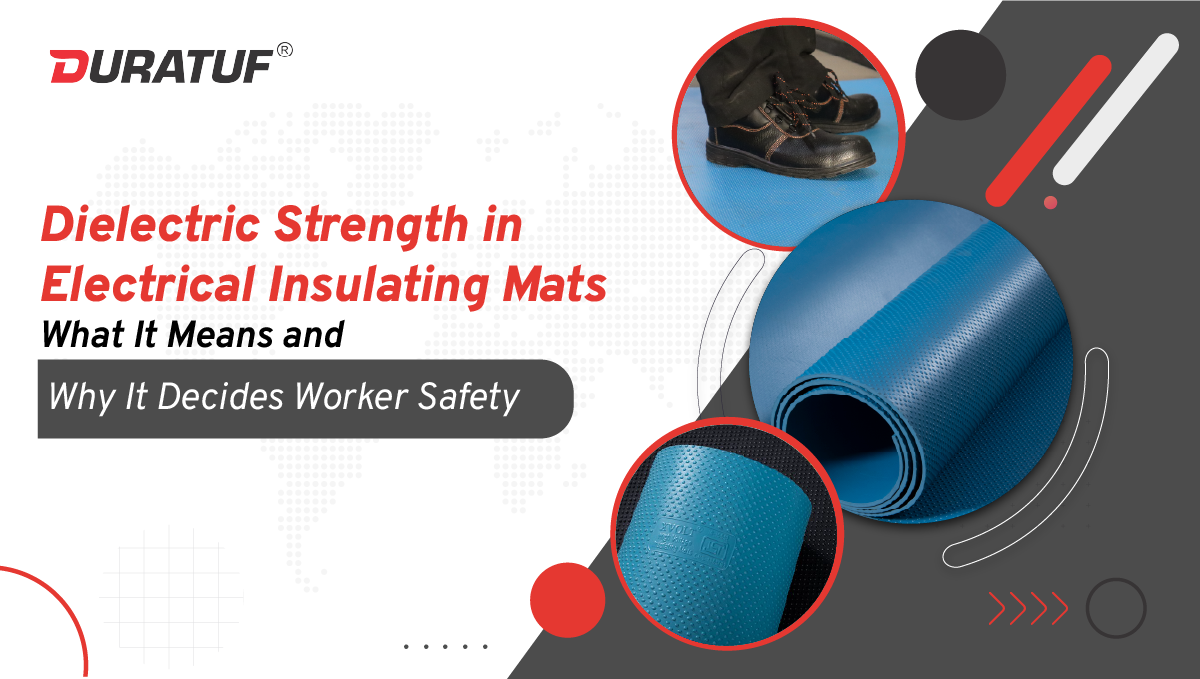
The key material property is dielectric strength, the maximum electric field the rubber can withstand before breakdown. Insulating mats are also characterised by volume resistivity, which determines how much current the material allows to pass through its thickness.
Where are Electrical Insulating Mats Required?
Insulating mats are mandatory or strongly recommended in the following environments:
- Switchgear rooms and switchrooms in front of and between switch panels.
- Control rooms with exposed busbars or terminals.
- Transformer bays and generator rooms.
- HV/MV substation floors.
- Electrical workshops and maintenance areas.
- In front of MCCs (Motor Control Centres).
- Areas where live-line work or near-live work is performed.
- Wet or damp environments with electrical equipment.
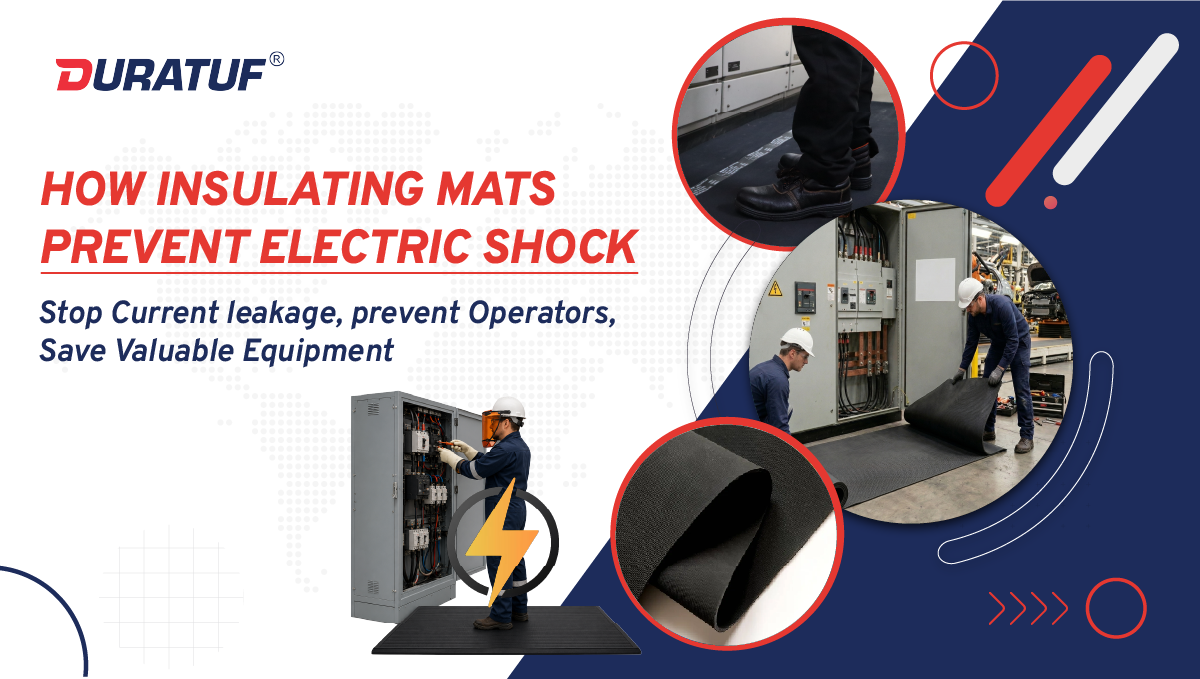
The mat must be placed so that the worker stands on it while operating or working near live equipment, not merely stored nearby.
Voltage Classes: Choosing the Right Mat
Every insulating mat is rated to a voltage class. Using a lower-class mat than the working voltage exposes workers to lethal risk.
| Class | Max. Use Voltage (AC) | Proof-Test Voltage | Primary Standard |
| Class 0 | 1,000 V | 5,000 V | IEC 61111 / IS 15652 |
| Class 1 | 7,500 V | 10,000 V | IEC 61111 |
| Class 2 | 17,000 V | 20,000 V | IEC 61111 |
| Class 3 | 26,500 V | 30,000 V | IEC 61111 |
| Class 4 | 36,000 V | 40,000 V | IEC 61111 |
Rule of thumb: Always select a mat class where the max. use voltage exceeds the highest potential working voltage at the location, not just the nominal system voltage.
For most industrial LV switchgear (415V / 440V), a Class 0 (1,000V) mat is the minimum compliant choice. For MV switchgear (11kV, 33kV), Class 2 or Class 3 mats are required.
International Standards for Electrical Insulating Mats
Different markets mandate different standards. Here is a reference table for procurement teams sourcing globally:
IEC 61111: International Electrotechnical Commission
The globally dominant standard for insulating rubber mats. Defines five voltage classes (0 - 4), specifies proof-test voltage, dielectric breakdown test, physical properties, and marking requirements. Mandatory or referenced in most of Europe, Asia, Middle East, and Africa.
IS 15652: Bureau of Indian Standards
India's national standard, largely harmonised with IEC 61111. Mandatory for mats used in Indian utilities, government installations, and most large industrial projects. Covers Class 0 (1kV) through Class 4 (36kV). Mats must carry BIS certification for regulated procurement.
ASTM D178: American Society for Testing and Materials
The primary US standard for rubber insulating matting. Defines Type I (natural rubber) and Type II (synthetic rubber) mats across multiple voltage classes. Referenced in OSHA 29 CFR 1910.137, Electrical Protective Equipment. Critical for AmeriVolt product lines targeting the North American market.
How to Select the Right Insulating Mat: 4-Step Framework
Step 1: Identify the Working Voltage
What is the highest voltage present at the work location? This determines the minimum class required. Do not use system nominal voltage alone, factor in possible overvoltage conditions.
Step 2: Determine the Operating Environment
- Dry indoor environment → standard mat specification.
- Wet, damp or outdoor environment → specify a mat with additional surface profile and verify the standard permits outdoor use at the selected class.
- High-temperature environments (near transformers, ovens) → verify thermal stability rating of the mat compound.
Step 3: Identify the Applicable Standard for Your Region
Use the table above. Ensure the mat you specify carries a compliance certificate for your region's standard, a CE marking on an IEC 61111 mat does not automatically satisfy ASTM D1048 for a US facility.
Step 4: Verify Physical Dimensions and Coverage
The mat must cover the full standing zone of the worker. Standard widths are 1m and 1.2m; lengths come in rolls (up to 10m) or cut sheets. Ensure coverage in front of and between panels, not just at a single operating point.
Types of Insulating Mats by Surface Profile
Smooth Surface Mats: Higher dielectric performance per thickness. Preferred for lab environments and control rooms where cleanliness is a priority.
Ribbed / Corrugated Surface Mats: Better grip, especially in industrial environments where oil or moisture may be present. The corrugated profile also reduces surface tracking paths.
Diamond / Stud Profile Mats: Common in heavy-duty switchgear applications. Good balance of grip, cleanability and dielectric performance.
Maintenance, Testing & Retirement Criteria
An insulating mat is only protective if it remains electrically intact. Physical damage or chemical degradation can silently destroy its dielectric properties without visible signs.
Inspection Frequency
- Visual inspection: Before every use in critical applications; minimum monthly in fixed installations.
- Electrical retesting: Annually, per IEC 61111 and most regional regulatory frameworks.
What to Look For During Inspection
- Cuts, punctures or embedded conductive particles like metal swarf, carbon deposits.
- Ozone cracks like surface crazing, especially near edges as ozone attacks natural rubber compounds.
- Oil or chemical contamination.
- Permanent deformation or thinning at frequently-used areas.
- Any visible tracking marks from flashover events.
Storage Requirements
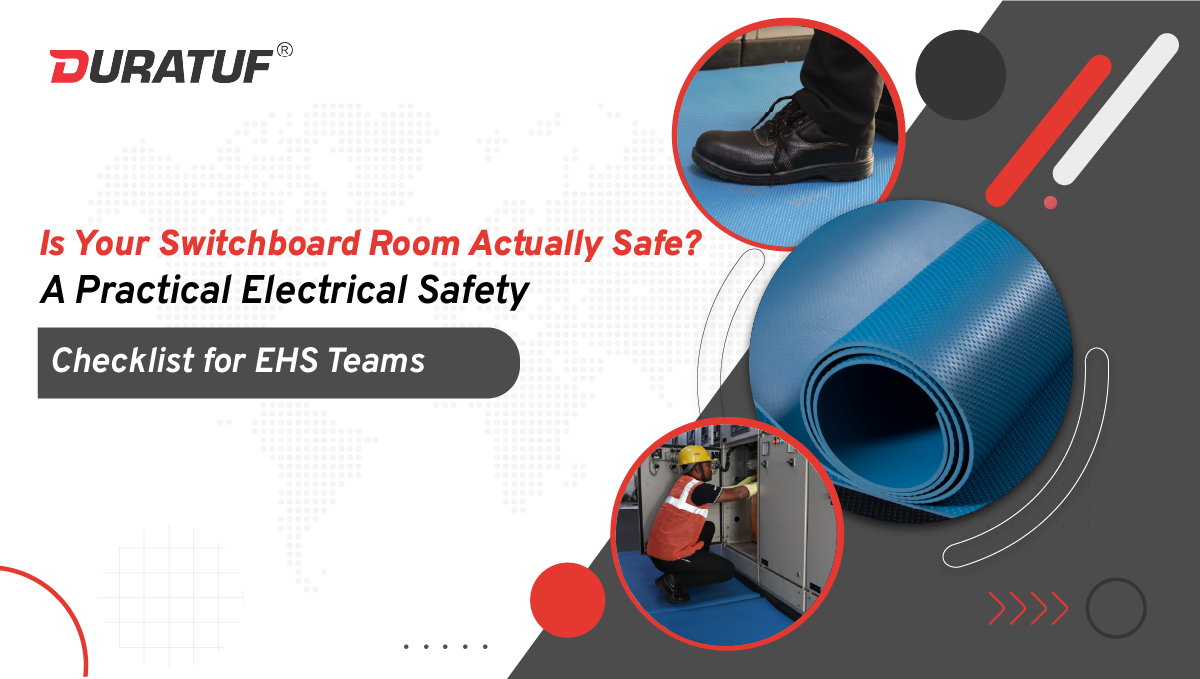
Store insulating mats away from ozone-generating equipment ( like transformers, motors, UV lights), heat sources, and direct sunlight. Keep it in roll form only and do not fold. Avoid contact with oils, solvents or petroleum-based products.
When to Retire a Mat
A mat that fails visual inspection must be taken out of service immediately. A mat that fails annual dielectric retesting must be destroyed, do not downgrade to a lower-voltage application.
Common Compliance Errors to Avoid
- Using IS 5424 general-purpose rubber sheet as an insulating mat IS 5424 is a general rubber sheet standard, it carries no dielectric rating. Using it as an insulating mat creates documented liability.
- Specifying Class 0 for 11kV applications Surprisingly common in smaller industrial facilities. Class 0 is rated to 1kV max. use voltage. An 11kV system requires minimum Class 2.
- Ignoring retesting requirements Purchasing a certified mat once and using it indefinitely is not compliance. Annual retesting is a regulatory requirement in most jurisdictions, the certificate of conformity issued at purchase does not remain valid indefinitely.
- Insufficient coverage A single 1m × 1m mat in front of a 5m switchboard panel does not provide coverage for all operating positions. Size and layout the matting to cover all live-work zones.
Conclusion
Electrical insulating mats are not a commodity floor covering, they are a safety protective device that must be specified, installed, inspected, and retired with the same rigour as any other PPE.
The correct selection process starts with working voltage, proceeds to standard compliance for your region, accounts for the operating environment and includes a documented maintenance and retesting programme.