
11kV electrical rubber mat: Applications, Specification, Thickness & More
If you manage electrical safety for a substation, MCC room, transformer bay, or any facility running on 11 kV systems, you need a mat that does more than sit on the floor. It has to prove its insulation value on paper, pass a dielectric test, and comply with the standard your safety auditor recognises.
This guide covers everything you need to know about 11 kV electrical rubber mats: the correct thickness and specifications under each applicable standard, how to select the right class for your facility, where they are deployed, how the 11 kV category compares to 3.3 kV and 33 kV mats, and what to check for compliance before you sign off a purchase order.
What is an 11 kV Electrical Rubber Mat?
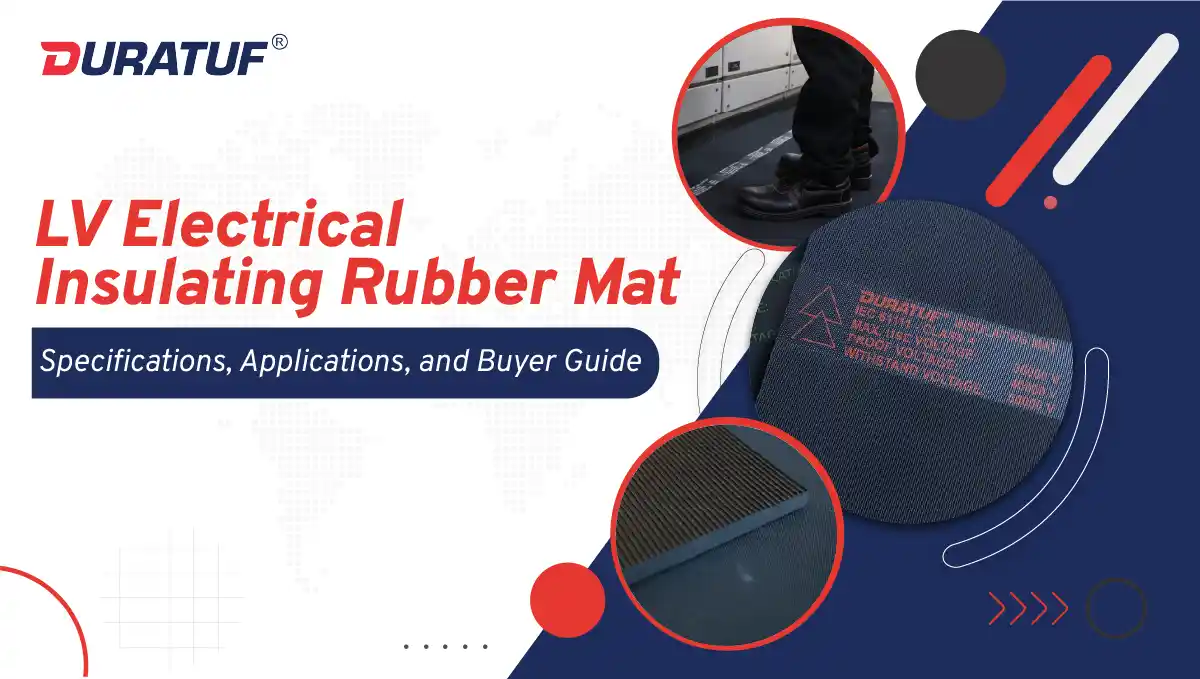
An 11 kV electrical rubber mat is a dielectric-grade rubber floor covering designed to protect workers from electric shock in areas where the operating voltage reaches up to 11,000 volts. It is not a generic anti-fatigue mat or industrial floor mat. It is PPE, classified under electrical safety equipment, and subject to mandatory certification requirements in most jurisdictions.
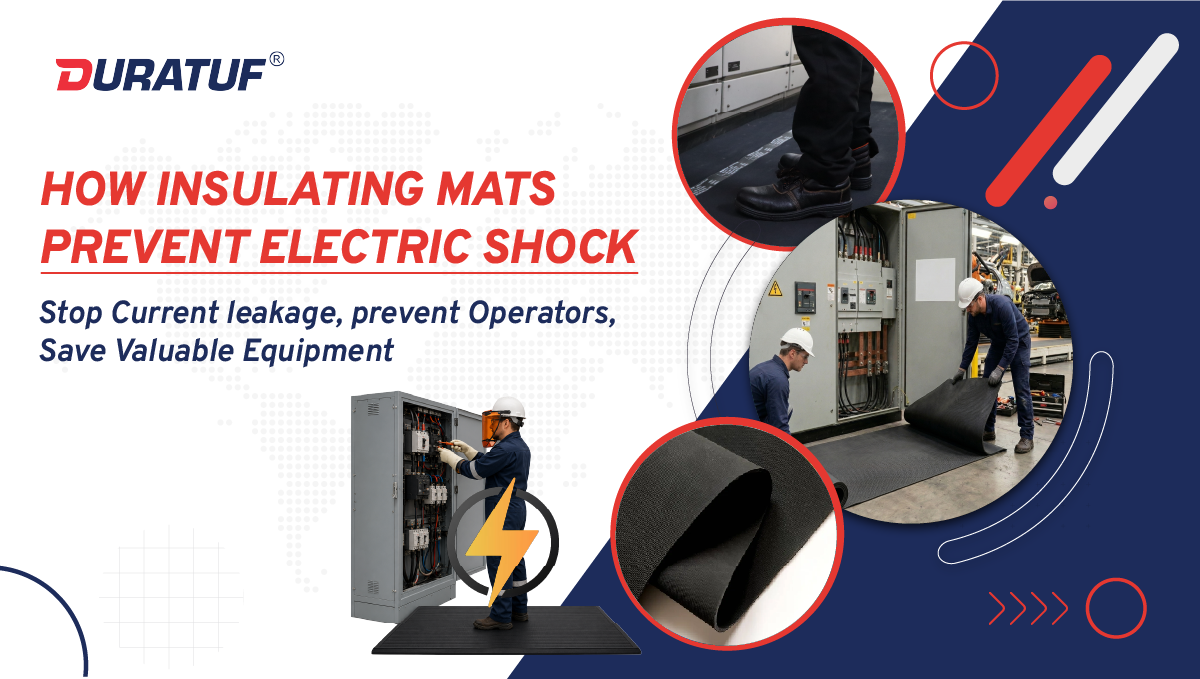
The mat acts as a high-resistance barrier between the worker standing on it and the ground. In the event of accidental current leakage from live equipment, the mat prevents that current from passing through the worker’s body to earth. At 11 kV, that protection is not optional. Facilities running medium-voltage systems without certified insulating mats in front of live equipment are in violation of electrical safety regulations and exposed to significant liability.
The term “11 kV electrical rubber mat” refers to the system’s operating voltage. The mat itself is rated to a higher test voltage to provide the safety margin that standards demand.
Which Standard Applies to 11 kV Electrical Rubber Mats?
Three major standards govern electrical insulating mats globally. The right one depends on where your facility is located and which regulatory framework your safety audit operates under.
IS 15652:2006 (India Standard)
IS 15652 is the Bureau of Indian Standards specification for electrical insulating mats. It is the mandatory standard for Indian facilities and is required for safety audit compliance under Indian labour regulations. IS 15652 classifies mats into three voltage classes: Class A (3.3 kV), Class B (11 kV), and Class C (33 kV).
For 11 kV systems in India, the correct mat is IS 15652 Class B.
XVOLT IS 15652 mats from Duratuf are ISI Marked and BIS Approved, with type testing by third-party certification agencies and ISI marking printed on the mat surface at every meter for on-site traceability.
IEC 61111:2009 (International Standard)
IEC 61111 is the International Electrotechnical Commission standard for electrical insulating mats and is accepted across Europe, the Middle East, Southeast Asia, and most export markets. It classifies mats into five classes: Class 0 through Class 4, based on maximum use voltage.
For 11 kV systems, the applicable mat class under IEC 61111 is Class 2 (maximum use voltage: 17.0 kV). Class 1 covers only up to 7.5 kV and is not adequate for 11 kV systems. The correct selection is Class 2, which provides the required safety margin above the system voltage.
Duratuf’s IEC 61111 electrical insulating mats are available in Class 2 and all other classes, supplied in standard rolls from the Bhiwadi and Dubai warehouses.
ASTM D178 (Americas and Some GCC Facilities)
ASTM D178 is the American Society for Testing and Materials standard for rubber matting for electrical purposes. It is used primarily in the USA, Canada, and some GCC facilities that specify American standards. Like IEC 61111, ASTM D178 classifies mats into Classes 0 through 4. For 11 kV systems, Class 2 applies (maximum use voltage: 17.0 kV).
Duratuf’s ASTM D178 electrical insulating mats are available in Class 2 with Type I and Type II options.
Thickness and Full Specifications for 11 kV Rubber Mats
The thickness of an 11 kV electrical rubber mat depends on the standard under which it is manufactured. Each standard specifies its own thickness requirement for the corresponding voltage class.
IS 15652:2006 — Class B (11 kV)
| Specification | Value |
|---|---|
| Class | B |
| Working Voltage | 11.0 kV |
| AC Proof Test Voltage | 22.0 kV |
| Dielectric (Breakdown) Voltage | 45.0 kV |
| Standard Thickness | 2.5 mm |
| Standard Roll Size | 1.0 m wide × 20.0 m long |
| Weight per m² | 4.0 kg |
| Tensile Strength (min) | 15 N/mm² (15 MPa) |
| Elongation at Break (min) | 250% |
| Leakage Current (max) | 10 mA |
| Flame Retardance | Extinguishes within 5 seconds |
| Working Temperature | -10°C to +55°C |
| Antiskid Design | Dotted pattern |
| Standard Colours | Black, Blue |
Thickness note: The standard thickness for IS 15652 Class B (11 kV) is 2.5 mm. The 3.0 mm thickness applies to Class C (33 kV). Using a thicker mat does not increase the voltage class. Voltage class is determined by the rubber compound’s dielectric properties, verified through type testing, not thickness alone.
IEC 61111:2009 — Class 2 (for 11 kV Systems)
| Specification | Value |
|---|---|
| Class | 2 |
| Maximum Use Voltage | 17.0 kV AC |
| AC Proof Test Voltage | 20.0 kV |
| Dielectric Withstand Voltage | 30.0 kV |
| Recommended Thickness | 3.0 mm |
| Maximum Allowable Thickness | 8.0 mm |
| Standard Roll Size | 1.0 m wide × 10.0 m long |
| Roll Weight | 40 kg |
| Mechanical Puncture Resistance (min) | 70 N |
| Slip Resistance (min) | 50 N |
| Flame Retardance | Does not catch fire |
| Working Temperature | -25°C to +55°C |
| Anti-skid Design | Top Fine Ribbed, Bottom Textured |
| Standard Colour | Black |
| Customisation Available | Thickness up to 14 mm; width up to 1,220 mm; length up to 15 m |
ASTM D178 — Class 2 (for 11 kV Systems)
| Specification | Value |
|---|---|
| Class | 2 |
| Maximum Use Voltage | 17.0 kV AC |
| AC Proof Test Voltage | 20.0 kV |
| Dielectric Test Voltage | 30.0 kV |
| Recommended Thickness | 6.4 mm |
| Standard Roll Size | 1.0 m wide × 10.0 m long |
| Roll Weight | 92 kg |
| Tensile Strength (min) | 4.83 MPa (700 psi) |
| Elongation at Break (min) | 250% |
Quick Reference: Correct Class and Thickness for 11 kV
| Standard | Market | Applicable Class | Correct Thickness |
|---|---|---|---|
| IS 15652:2006 | India | Class B | 2.5 mm |
| IEC 61111:2009 | International | Class 2 | 3.0 mm (recommended) |
| ASTM D178 | Americas / Some GCC | Class 2 | 6.4 mm |
How to Select the Right 11 kV Electrical Rubber Mat
Selecting an 11 kV electrical rubber mat involves four decisions. Get all four right and the mat will pass your safety audit, protect your workers, and last its full service life.
1. Confirm the Applicable Standard at Your Facility
This is the first decision, and it is non-negotiable. Check your facility’s safety compliance requirements:
- India: IS 15652:2006 is mandatory. Order Class B.
- UAE, Saudi Arabia, UK, Europe, Southeast Asia: IEC 61111:2009. Order Class 2.
- USA, Canada: ASTM D178. Order Class 2.
- Mixed or international audit scenarios: IEC 61111 Class 2 is the safer default. It is globally recognised and accepted across the majority of export markets.
2. Never Select Below the System Voltage
Always select a mat whose maximum use voltage equals or exceeds the highest voltage present in the work zone. For 11 kV systems:
- IS 15652 Class B: maximum working voltage is 11.0 kV. This is the minimum compliant selection for Indian facilities.
- IEC 61111 Class 2: maximum use voltage is 17.0 kV. This provides the required safety margin above the 11 kV system voltage and is the correct IEC choice.
- Some high-risk facilities opt for IEC 61111 Class 3 (26.5 kV) or IS 15652 Class C (33 kV) even in 11 kV zones. This is acceptable. A higher-class mat always covers a lower-voltage requirement.
3. Account for the Physical Work Environment
The voltage class covers electrical protection. The rubber compound and surface design should match the physical conditions at the installation point:
- Oil or chemical exposure: Confirm oil resistance specification. ASTM D178 Type IIC mats are tested specifically for oil resistance. For IS 15652 mats, request the supplier’s oil resistance test data.
- Wet or humid environments: Specify anti-skid surfaces on both sides. Confirm slip resistance test value. IEC 61111 minimum is 50 N.
- Outdoor or cold installations: Check low-temperature resistance. IEC 61111 Class 2 mats are tested to -25°C with no visible cracks or breaks.
- Heavy foot traffic zones: Verify mechanical puncture resistance. IEC 61111 minimum is 70 N.
4. Calculate the Coverage Area Before Ordering
Standard roll sizes for IS 15652 Class B are 1.0 m wide × 20.0 m long. For IEC 61111 Class 2, standard rolls are 1.0 m wide × 10.0 m long. Measure the coverage area in front of each panel, switchgear lineup, or control desk before placing an order. Custom widths up to 1,220 mm and custom lengths are available from Duratuf for non-standard installations.
Where Are 11 kV Electrical Rubber Mats Used?
Any location where workers stand near live 11 kV equipment during operation, maintenance, or inspection qualifies. The placement rule is straightforward: the mat goes under the worker’s feet, positioned so they are standing on it while interacting with the equipment. Simply having a mat in the room does not satisfy compliance requirements.
Electrical Substations
11 kV substations are among the most common deployment environments. Mats are placed in front of:
- 11 kV switchgear panels and circuit breakers
- Transformer bays and tap-changer areas
- Control desks and relay panels in control rooms
- Bus bar sections during live maintenance
HT and MV Switchgear Rooms
High-tension and medium-voltage switchgear rooms in industrial facilities often operate at 11 kV. The mat covers the standing area in front of:
- HT switchboards and incoming feeder panels
- Capacitor bank control panels
- Ring main units and sectionalising switchgear
Motor Control Centres (MCCs)
Large MCCs in cement plants, steel mills, mining operations, and manufacturing facilities commonly run at 11 kV or step down from 11 kV. Insulating mats are placed in front of MCC lineups for operator protection during switching and isolation tasks.
Transformer Rooms
Workers performing maintenance on 11 kV distribution transformers require insulated standing protection in front of:
- Primary connections and HT cable entry points
- Transformer control panels
- On-load tap changer panels
Power Generation Plants
In thermal, hydro, and wind generation facilities, 11 kV is a common generator or step-up bus voltage. Mats are required at:
- Generator control rooms
- Turbine control desks
- Bus bar and switchyard areas
Lift and Generator Rooms in Commercial Buildings
High-rise buildings and commercial campuses with 11 kV metering or distribution require mats in front of 11 kV incomer panels, automatic transfer switch panels, and generator control boards.
High-Voltage Testing Laboratories
Laboratories testing electrical components at 11 kV or above require insulating mats at all test bench positions, switching control points, and cable connection areas. In these environments, mats may be subject to higher dielectric stress and should be inspected more frequently than the standard interval.
11 kV vs 3.3 kV vs 33 kV: What Is Different?
If your facility has systems running at different voltages, or if you are specifying mats for a project covering multiple voltage levels, this comparison covers all three IS 15652 classes side by side.
| Parameter | Class A (3.3 kV) | Class B (11 kV) | Class C (33 kV) |
|---|---|---|---|
| Working Voltage | 3.3 kV | 11.0 kV | 33.0 kV |
| AC Proof Test Voltage | 10.0 kV | 22.0 kV | 36.0 kV |
| Dielectric (Breakdown) Voltage | 30.0 kV | 45.0 kV | 65.0 kV |
| Standard Thickness | 2.0 mm | 2.5 mm | 3.0 mm |
| Weight per m² | 3.2 kg | 4.0 kg | 4.8 kg |
| Standard Roll Length | 20.0 m | 20.0 m | 10.0 m |
Key selection rule: You can always use a higher-class mat for a lower-voltage application. A Class C (33 kV) mat can be used in a 3.3 kV or 11 kV zone. A Class B (11 kV) mat cannot be used in a 33 kV zone. Never specify downward.
For IEC 61111, the equivalent class mapping by system voltage:
| IEC Class | Maximum Use Voltage | Suitable for System Voltage |
|---|---|---|
| Class 1 | 7.5 kV | Up to 6.6 kV systems |
| Class 2 | 17.0 kV | 11 kV systems — minimum compliant class |
| Class 3 | 26.5 kV | 11 kV to 22 kV systems |
| Class 4 | 36.0 kV | 33 kV systems |
For a full technical comparison between 3.3 kV, 11 kV, and 33 kV mats under IS 15652, read our guide to differences between 3.3 kV, 11 kV, and 33 kV insulation mats.
Compliance, Certification, and What to Verify Before Buying
An 11 kV electrical rubber mat without proper certification is not compliant and will fail a safety audit. Here is what to check before signing off any purchase order.
For IS 15652 Class B Mats (India)
ISI Mark on the Mat: The mat must carry an ISI mark printed at every meter on the surface. This confirms BIS approval and provides batch-level traceability during audits.
Type Test Certificate: The manufacturer must hold a valid IS 15652:2006 type test from a BIS-recognised laboratory. Request a copy with every supply, not just the first order.
Third-Party Test Report: A third-party test report confirming proof voltage (22 kV), dielectric voltage (45 kV), tensile strength (min 15 MPa), and elongation (min 250%) for the specific batch supplied.
Product Code on Mat: Product code and dimensions must be legible on the mat for on-site traceability and audit documentation.
For IEC 61111:2009 Mats (International)
Class Marking: The mat must be permanently marked with the voltage class (Class 2) and the standard reference (IEC 61111:2009) at regular intervals along the roll.
Accredited Test Report: Proof voltage (20 kV) and dielectric withstand (30 kV) test reports from an accredited testing body, specific to the batch supplied.
Dimensional Compliance: Verify thickness on receipt using a calibrated gauge. Tolerance under IEC 61111 is ±10% on thickness.
Traceability: Batch number, date of manufacture, and product code must be visible on the mat or the roll label.
Red Flags to Avoid
- Mats supplied without any test certificate or voltage class marking
- Suppliers claiming IS 15652 compliance for PVC-based mats — IS 15652 requires elastomeric rubber composition, not PVC
- Mats with inconsistent thickness when measured across the roll width on receipt
- Certificates that reference only the standard number without test values, test dates, or laboratory details
Maintenance, Inspection, and Replacement
A certified 11 kV electrical rubber mat degrades over time. A mat that passes its dielectric test on day one can fail silently over 18 to 24 months if stored or used incorrectly. EHS managers need a structured inspection and replacement protocol, not just a purchase order.
Visual Inspection (Before Every Use in High-Risk Environments)
Check for:
- Cuts, punctures, or tears on the surface, underside, or edges
- Embedded conductive particles such as metal swarf, filings, or carbon deposits
- Ozone-related surface crazing, particularly near electrical panel edges where ozone concentrations are higher
- Permanent deformation or localised thinning at regularly-used standing positions
- Burn marks, tracking marks, or discolouration from flashover events
- Oil or chemical contamination that has softened or swollen the rubber
Any mat showing these signs must be removed from service immediately, regardless of its age or remaining warranty.
Periodic Electrical Retesting
IS 15652:2006 and IEC 61111:2009 both support periodic electrical retesting of mats in service. Standard industry practice for active daily-use zones is retesting at 12-month intervals. For lower-frequency use areas, 24 months is common. Your facility’s electrical safety plan should specify the retesting interval and nominate a responsible person.
Storage Guidelines
- Store mats rolled, not folded. Folding creates permanent creases that concentrate mechanical stress and can compromise dielectric integrity at the fold line.
- Keep away from ozone-generating equipment such as UV lamps, electric motors, and welding machines. Ozone degrades rubber compounds even without physical contact.
- Store in a cool, dry area away from direct sunlight and heat sources above 55°C.
- Do not stack heavy items on rolled mats.
Replacement Triggers
Remove a mat from service and replace it when it:
- Fails a periodic electrical retest
- Shows any visible physical damage
- Has been exposed to strong acid, alkali, or solvent contamination
- Has served in an active high-voltage zone for more than 3 years (adjust based on your facility’s specific risk assessment)
XVOLT IS 15652 Class B mats from Duratuf come with a warranty. Connect with us to know about warranty coverage terms and documentation requirements.